Chinese APT UNC3886 Targeted All Four Singapore Telecoms in Espionage Campaign
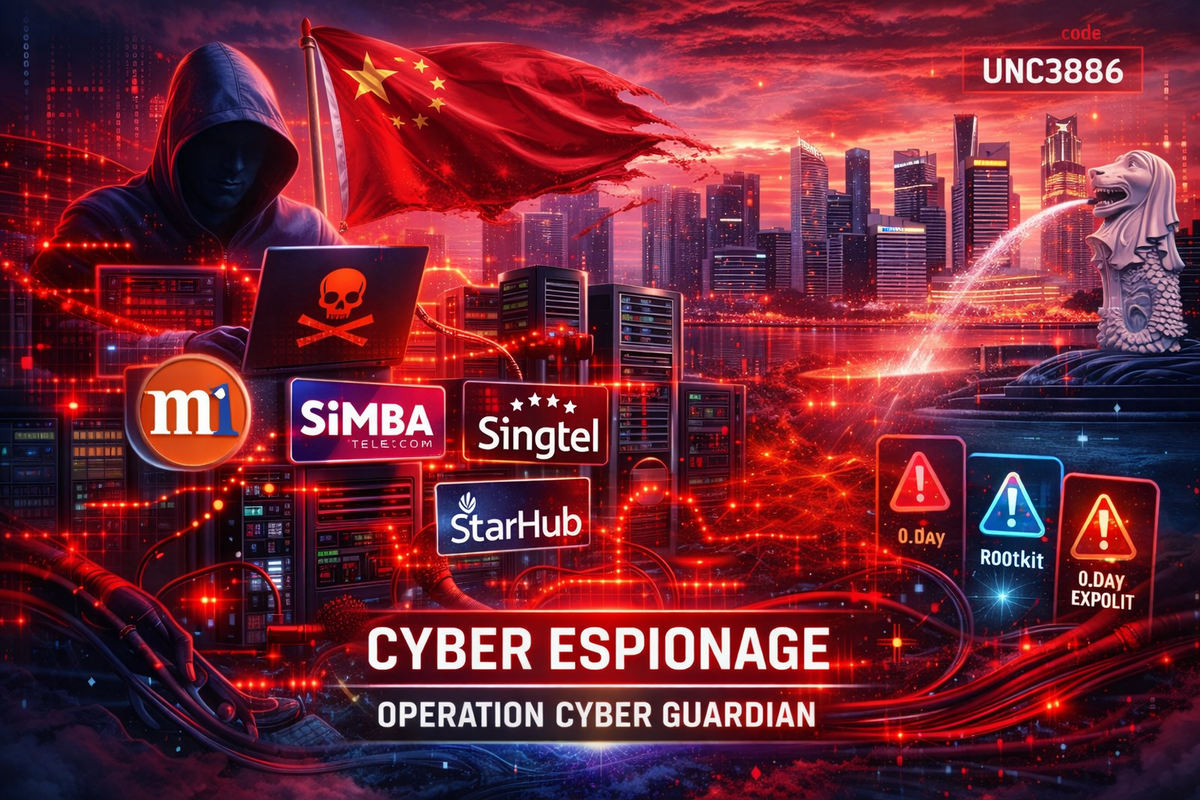
Singapore's Cyber Security Agency (CSA) has disclosed that the China-linked cyber espionage group UNC3886 conducted a deliberate campaign against the country's entire telecommunications sector, targeting all four major operators — M1, SIMBA Telecom, Singtel, and StarHub.
The disclosure follows comments made over six months ago by Singapore's Coordinating Minister for National Security, who publicly attributed the activity to UNC3886. The group has been active since at least 2022 and is known for targeting edge devices and virtualization technologies to gain initial access to high-value networks.
Zero-Day Exploit and Rootkit Deployment
CSA described UNC3886 as an APT with "deep capabilities" and outlined multiple intrusion techniques observed across the campaign.
In one case, the group weaponized a zero-day exploit to bypass a perimeter firewall and exfiltrate a small amount of technical data to support further operations. The specific vulnerability was not disclosed.
In a second instance, UNC3886 deployed rootkits to establish persistent access and conceal their presence within compromised networks. The attackers gained unauthorized access to portions of telco networks and systems, including infrastructure classified as critical, though the CSA assessed the intrusions were not severe enough to disrupt services.
Operation CYBER GUARDIAN
CSA launched a coordinated defensive operation dubbed CYBER GUARDIAN to counter the threat and restrict the attackers' lateral movement across telecom networks. Defenders have since closed off UNC3886's access points and expanded monitoring capabilities across all four targeted operators.
The agency stated there is no evidence that the group exfiltrated personal data such as customer records or disrupted internet availability.
Overlap with Known Campaigns
UNC3886's tactics align with previous reporting. In July 2025, Sygnia published details of a long-running espionage campaign attributed to a cluster it tracks as Fire Ant, which shares tooling and targeting overlaps with UNC3886. That research documented the group's pattern of infiltrating VMware ESXi and vCenter environments as well as network appliances — infrastructure commonly found in telecommunications providers.
The campaign reinforces the group's focus on strategic targets within critical infrastructure, particularly telecommunications and virtualization platforms that provide broad visibility into network traffic and communications.