Critical Windows Admin Center Flaw Enables Tenant-Wide Compromise via Azure SSO Bypass (CVE-2026-20965)
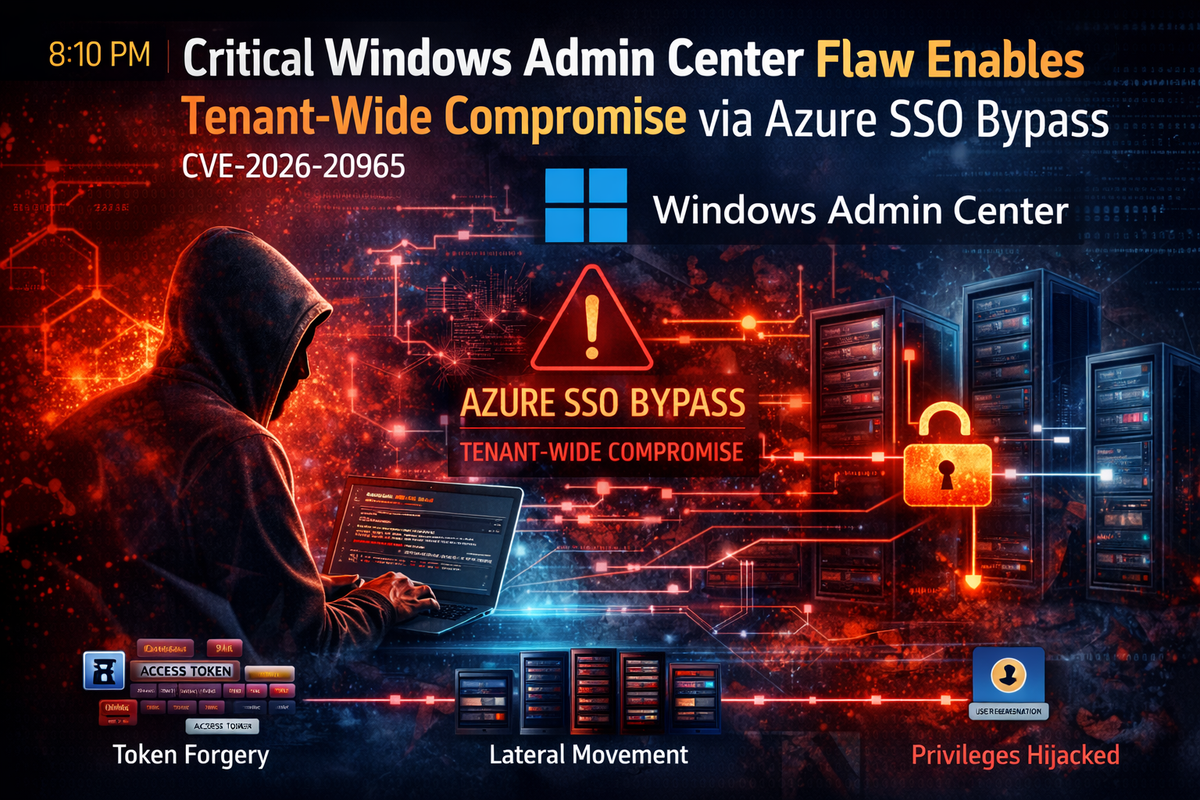
A high-severity vulnerability in Windows Admin Center's Azure AD Single Sign-On implementation allows attackers to escalate privileges and move laterally across an entire Azure tenant without valid credentials.
Cymulate Research Labs discovered the flaw and reported it to Microsoft in August 2025. Microsoft released a patch on January 13, 2026.
Vulnerability Details
- CVE ID: CVE-2026-20965
- Severity: High
- Affected Component: Windows Admin Center Azure Extension
- Fixed Version: 0.70.00
Who Is Affected
Every Azure VM and Azure Arc-joined machine running an unpatched Windows Admin Center Azure Extension (below version 0.70.00) is vulnerable.
How It Works
The vulnerability stems from two implementation flaws:
- Improper token validation - Windows Admin Center fails to verify that the user identity in the Proof of Possession (PoP) token matches the WAC.CheckAccess token. This allows attackers to combine a stolen access token from a privileged user with their own forged PoP token.
- Overly permissive JIT access - The Just In Time mechanism opens port 6516 to all source IPs via temporary NSG rules, not just the Azure portal gateway. This enables direct access to WAC instances without knowing the gateway DNS.
Attack Chain
An attacker with local administrator access on one WAC-managed machine can:
- Dump the WAC API server certificate
- Run a rogue server impersonating the legitimate WAC API
- Steal access tokens when privileged users connect via Azure Portal
- Forge PoP tokens using an attacker-controlled tenant
- Execute remote commands on any WAC-enabled machine the victim has access to
Impact
Successful exploitation enables:
- Lateral movement across all WAC-managed machines in the tenant
- Privilege escalation through user impersonation
- Exfiltration of managed identity credentials
- Cross-boundary compromise across resource groups and subscriptions
- Reduced traceability due to tokens originating from external tenants
Remediation
Update Windows Admin Center Azure Extension to version 0.70.00 or later immediately.
Detection
Monitor for virtual account creation with UPN format and external tenant domains:
DeviceLogonEvents
| where AccountName has "@"
| where not(AccountName has "<your tenant>")
The presence of virtual accounts associated with unknown tenant domains may indicate unauthorized WAC access.