Vishing Toolkits Enable Real-Time MFA Bypass Through Synchronized Phone and Browser Attacks
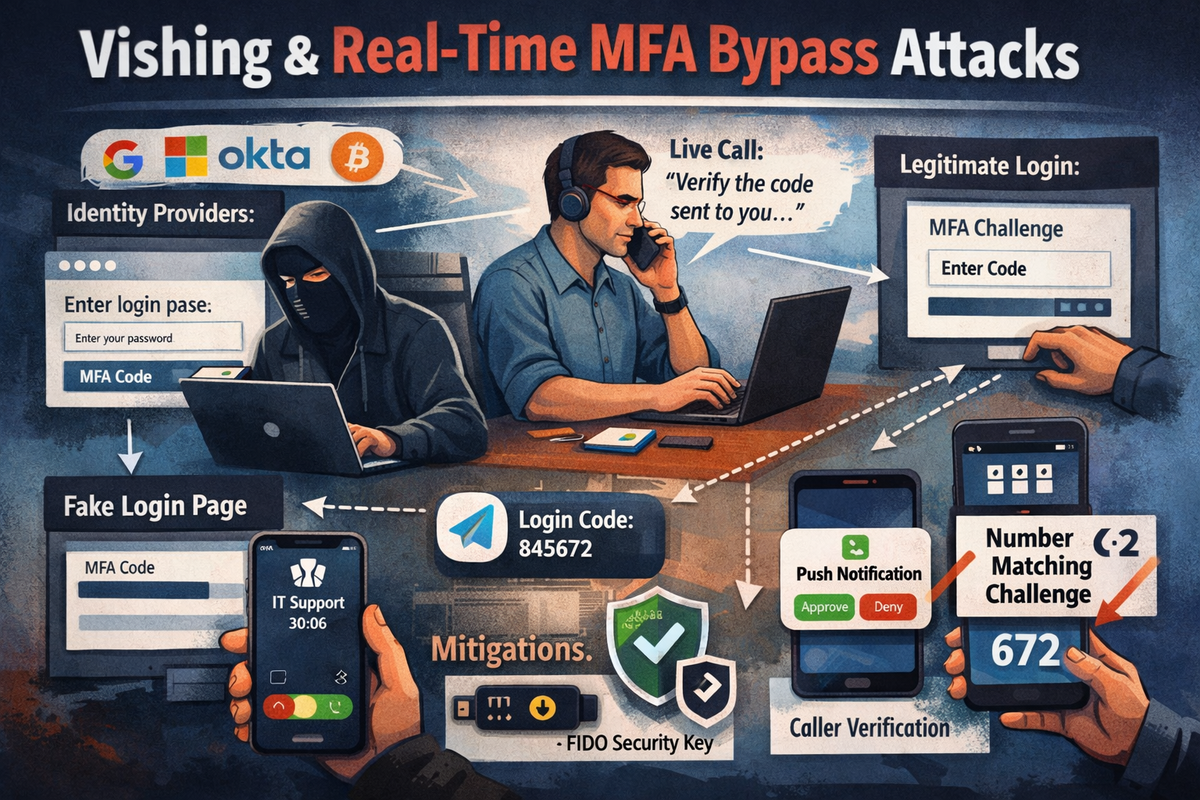
Security researchers have uncovered sophisticated phishing toolkits purpose-built for voice-based social engineering attacks that synchronize fake login pages with live phone conversations to defeat multifactor authentication in real time.
The toolkits, sold as-a-service to criminals, target major identity providers including Google, Microsoft, Okta, and various cryptocurrency platforms. Unlike traditional phishing that relies solely on deceptive emails, these hybrid attacks combine real-time human manipulation with dynamic web interfaces that adapt to each victim's security configuration.
Real-Time Orchestration
"Once you get into the driver's seat of one of these tools, you can immediately see why we are observing higher volumes of voice-based social engineering," said Moussa Diallo, threat researcher at Okta Threat Intelligence. "The threat actor can use this synchronization to defeat any form of MFA that is not phishing-resistant."
The attack sequence follows a consistent pattern. Threat actors first perform reconnaissance to learn employee names, commonly used applications, and IT support phone numbers. They then deploy customized phishing pages and call targets while spoofing the company's actual support number.
When victims enter credentials on the fake site, attackers receive them instantly via Telegram and simultaneously enter them into the legitimate login page to observe which MFA challenges appear.
Defeating Push Notifications
The real-time orchestration proves devastatingly effective against common MFA methods. Attackers update phishing sites on the fly to display pages matching whatever they're telling victims over the phone. If the legitimate service sends a push notification, the caller verbally warns the victim to expect it while their control panel displays a message implying the push was sent legitimately.
The toolkits even defeat push notifications with number matching or number challenge verification—security features designed specifically to combat phishing. Because attackers interact directly with victims, they simply ask targets to select or enter specific numbers displayed in the push challenge.
"Push with number matching/challenge is not phishing-resistant by definition, as a social engineer interacting on the phone with a targeted user can simply request a user to choose or enter a specific number," Okta's threat advisory explained.
Lowering the Barrier
Okta researchers observed newer phishing kits copying real-time orchestration features from earlier toolkits, with operators selling access to bespoke control panels customized for specific identity providers rather than generic kits targeting multiple services. The expertise required to conduct these campaigns is itself sold as-a-service, lowering barriers to entry for less technically skilled criminals.
Mitigations
Only phishing-resistant authentication methods reliably protect against these attacks:
- Deploy FIDO passkeys or hardware security keys that cryptographically verify users without transmitting interceptable credentials
- Implement network zones or tenant access control lists that deny authentication from anonymizing services
- Consider live caller verification through mobile apps to confirm whether users are speaking with authorized representatives
Organizations relying on traditional MFA without phishing resistance face mounting vulnerability to these hybrid threats.